How it works
People. Rooms. A fair week.
A cleaning schedule built from your answers, on your device, in a few minutes of clicking.
- 1
See the example first
The Lindqvist home is a complete, fictional schedule: two adults, two children, a cat, two bathrooms. Every page is real output from the maker.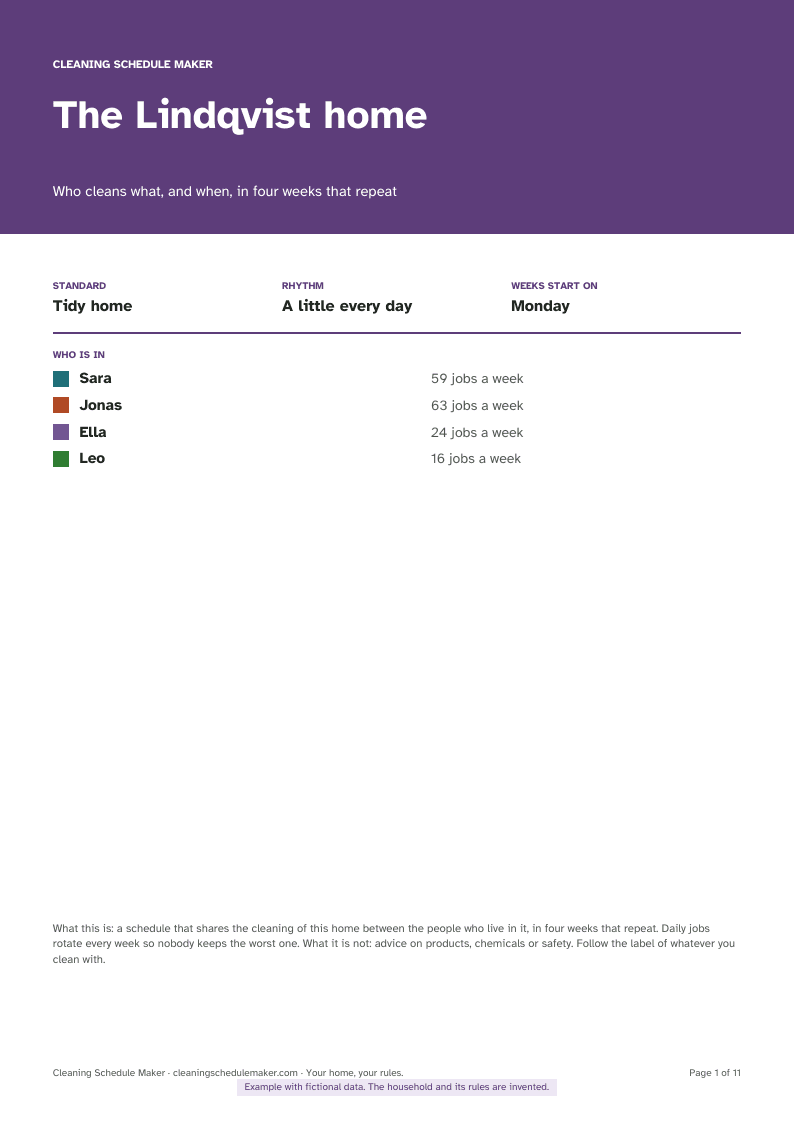
Example · fictional data - 2
Say who lives there
A name for each person, their age band and the time they can give on a weekday and on a weekend day. Mark days off. Age decides which jobs someone can do alone; time decides how many. Nothing is uploaded while you type.
- 3
Count your rooms
Bathrooms, bedrooms, living room, dining area, entry, laundry, home office, playroom, balcony or yard, and whether you have a pet. Only the rooms you count get jobs, and two bathrooms get two sets of bathroom jobs.
- 4
Choose how thorough and how the week is shared
Three standards: keep it running, tidy home, thorough. Three rhythms: a little every day, one area a day, mostly the weekend. Four colours. Extra pages: every job room by room, a chart for each child, the year month by month.
- 5
Preview and check the time
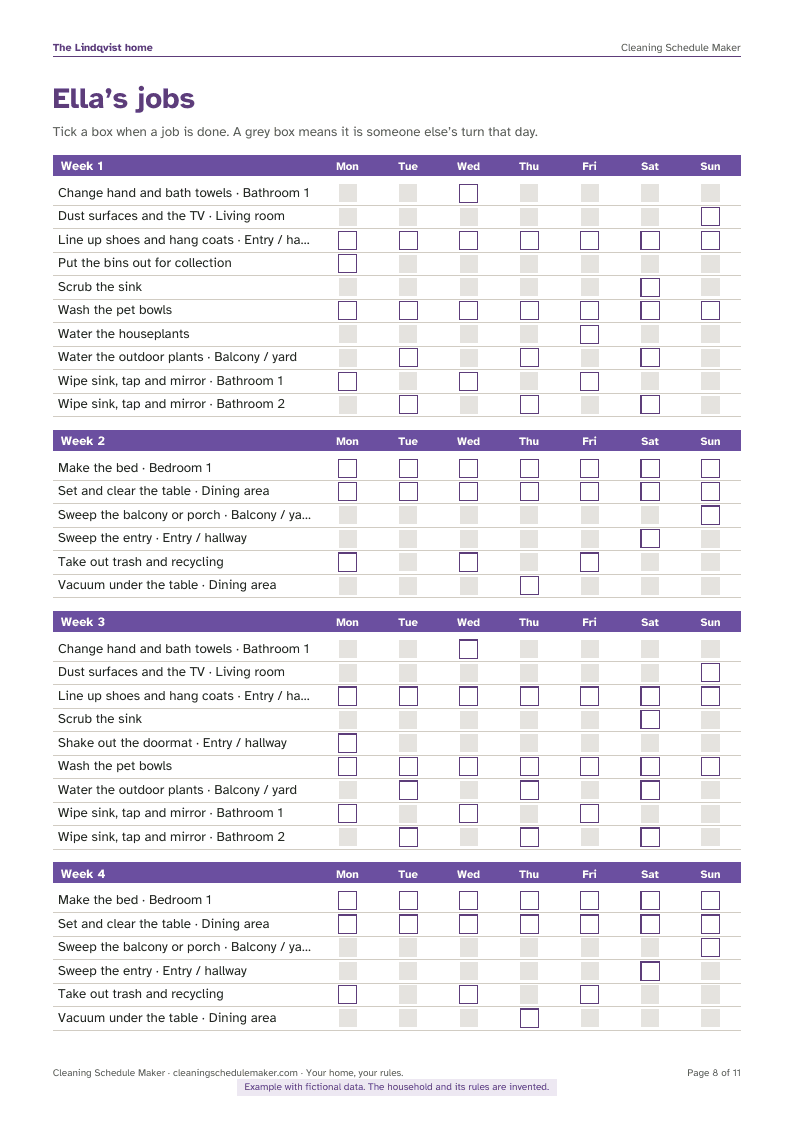
Week 1 as it prints, with every person in a row. If a day asks more than the time someone gave, the maker says which days before you print, so you can change the time, the standard or the rhythm.
Example · fictional data - 6
Download
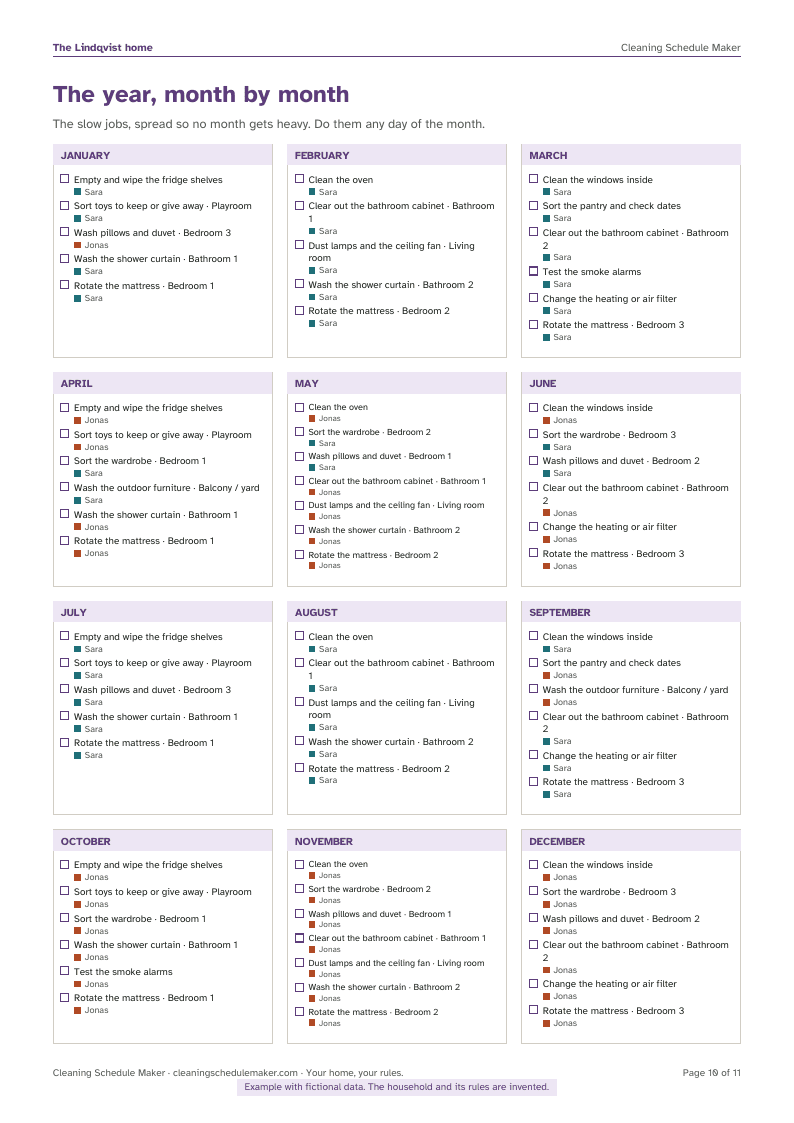
The PDF is built in your browser: four weeks that repeat, the room list, the children’s charts and the year page, in A4 or US Letter. The full export removes the preview mark and adds a calendar file, for everyone or one person, that repeats every four weeks.
Example · fictional data - 7
Keep the settings
“Save my plan file” downloads a plain file with your choices. When someone moves out or a child gets older, load it, change it, export again. The unlock works for two years on more than one device.
Practical questions